

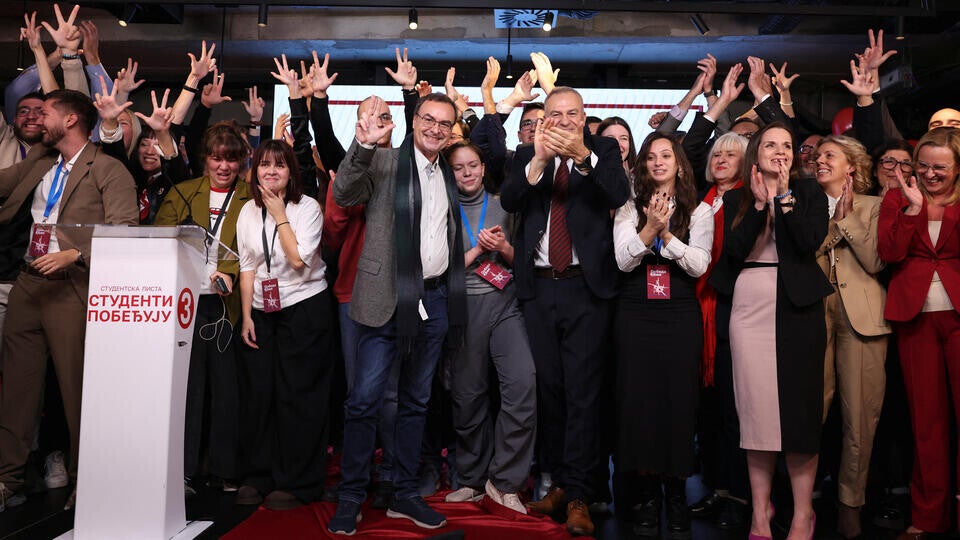
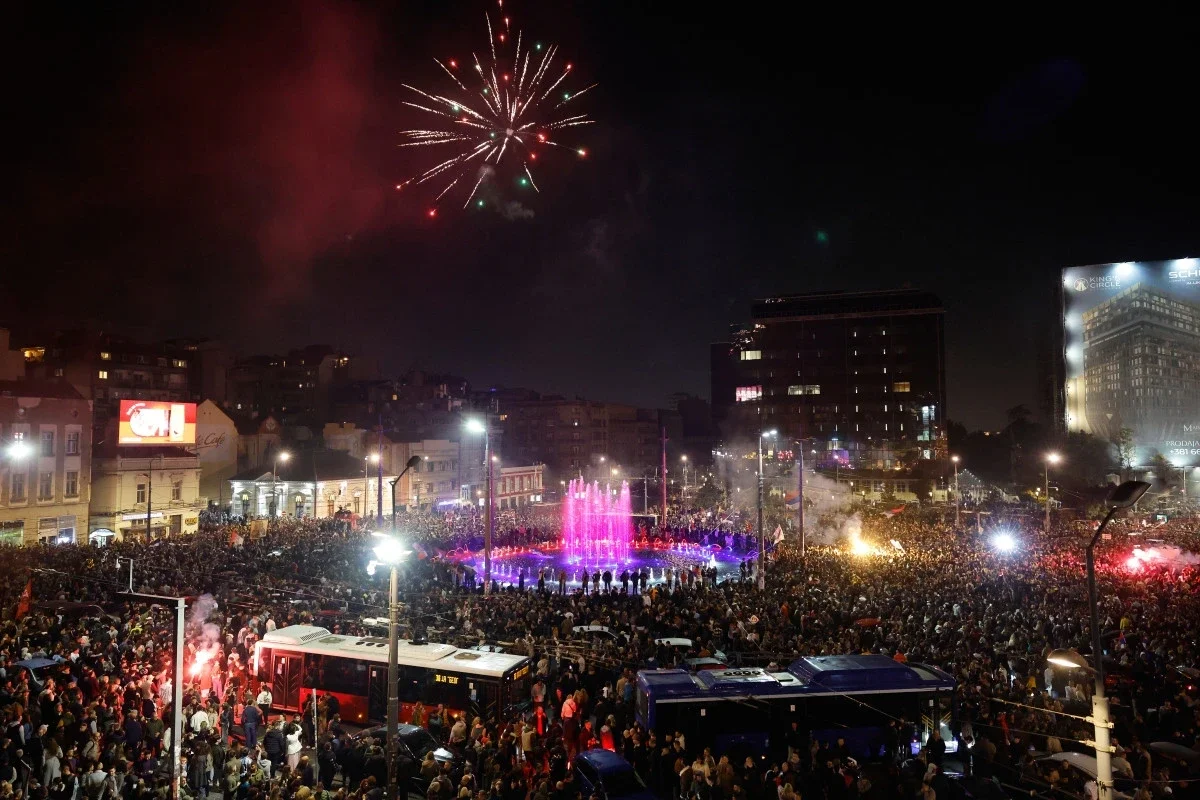
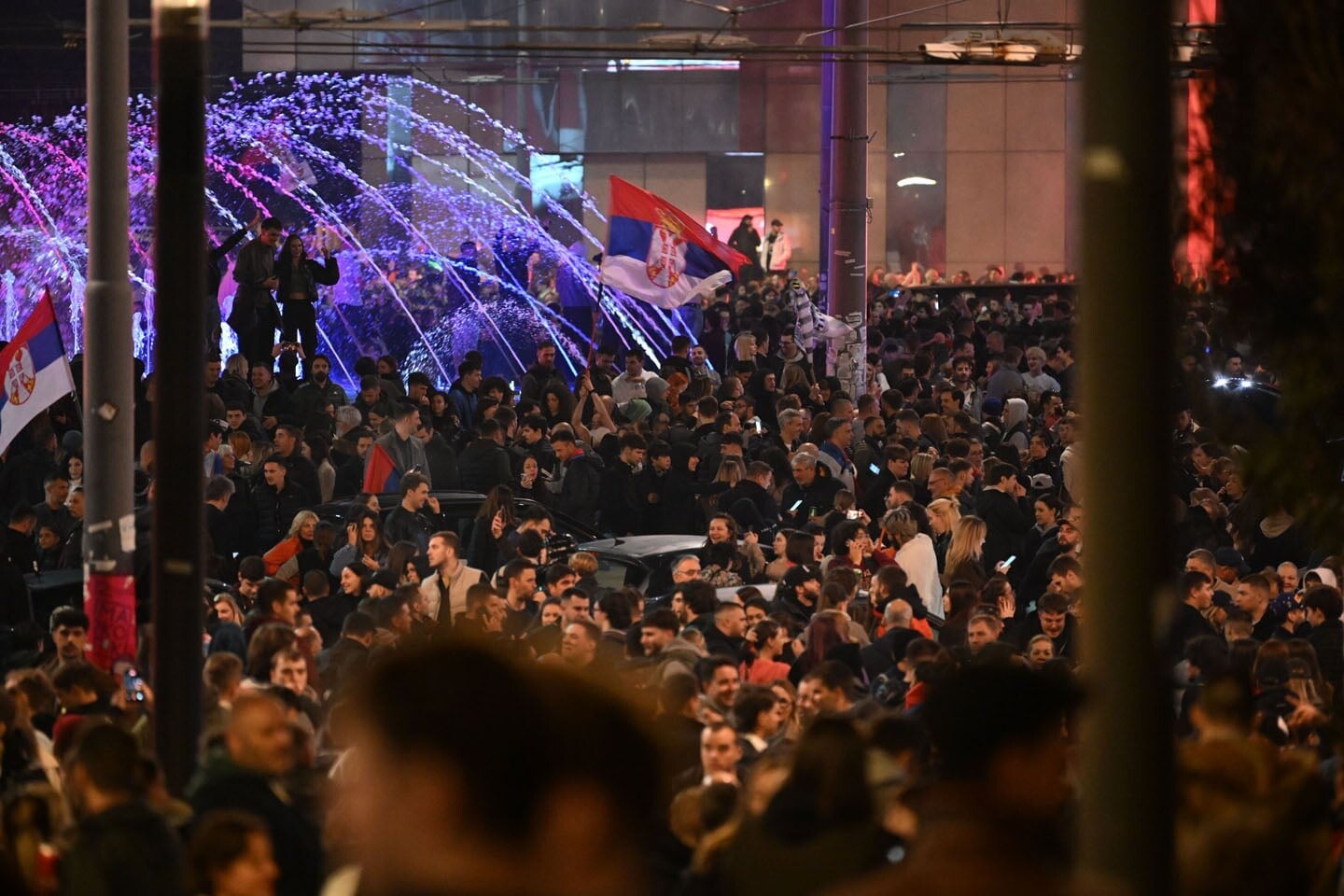
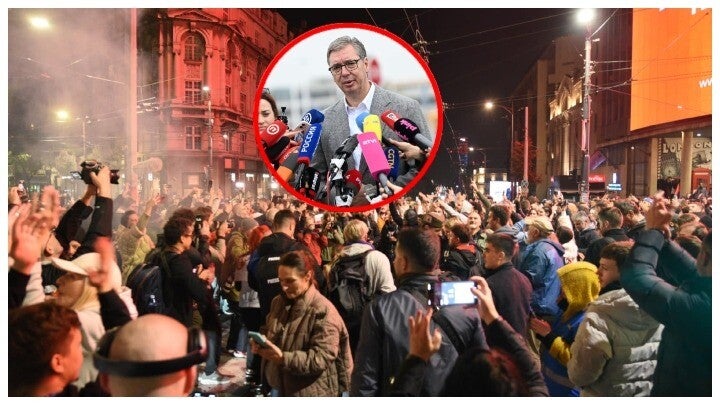
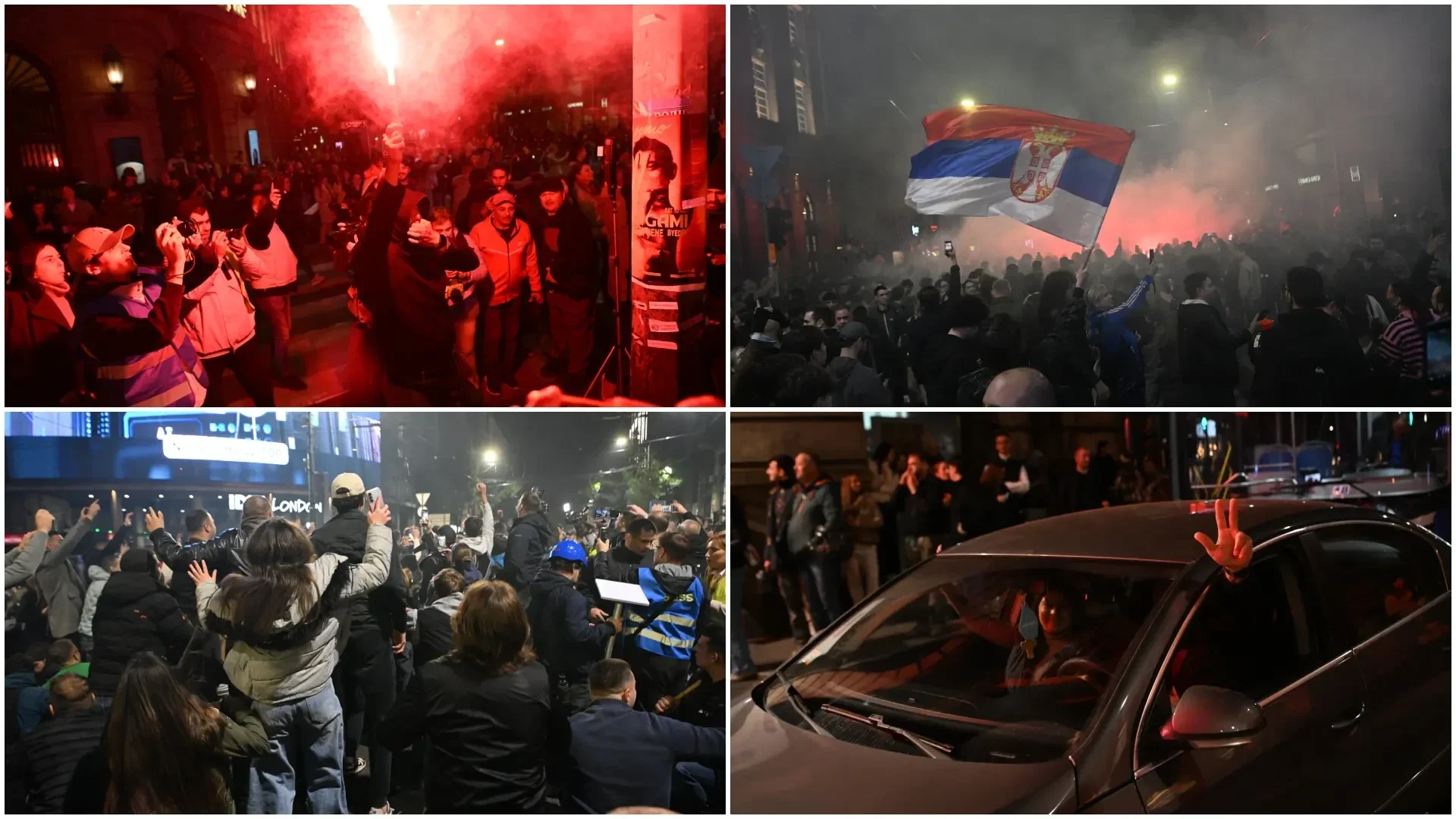
MOSCOW: The opposition celebrated the victory over Vucic in Belgrade all night. In the early parliamentary elections in Serbia on October 25, 2026, the opposition movement "Student List" won, which arose in the wake of mass anti-government protests. Former President Aleksandar Vucic has conceded defeat to his coalition after 12 years of political dominance. What is known about the election results, participants in the political struggle and the reaction of world leaders is in the Izvestia article.
Who won the elections in Serbia and how many votes did the parties gain?
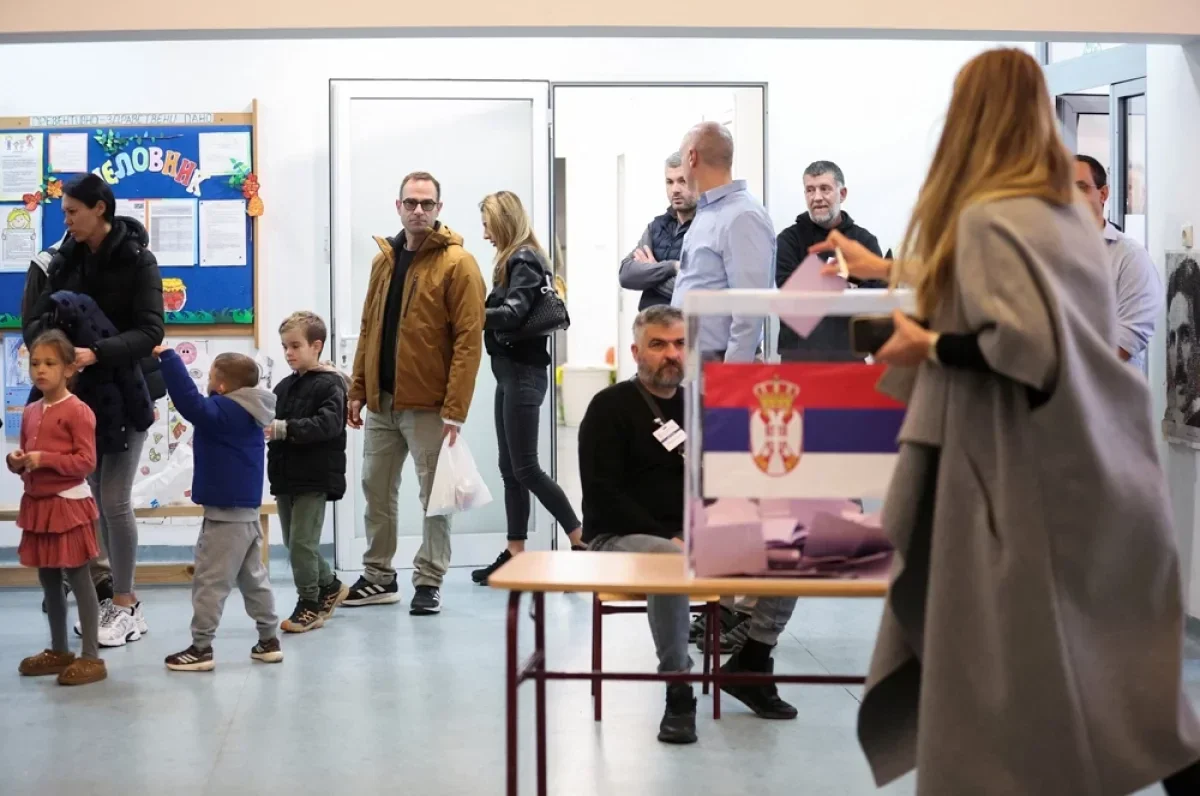
According to the data of the Republican Election Commission of Serbia (RIC), published after processing 7,926 of 8,392 polling stations (94.45%), the "Student List" received 52.19% of the votes (2.12 million). The Alexander Vucic—United Serbia coalition gained 39.52% (1.6 million). The Union of Socialists "Ivica Dacic — The Stability Factor" received 2.21%. The other lists scored less than 1% each.
The student movement can get 140 out of 250 seats in parliament, while Vucic's coalition can get 103 seats, and at least 126 seats are needed to form a parliamentary majority independently.
Who participated in the elections in Serbia
A total of 18 electoral lists were allowed to participate in the parliamentary elections. However, the main struggle unfolded between the ruling Serbian Progressive Party (SPP) and the new movement that emerged from the student protests. Vucic became the main representative of the ruling bloc. His party has been in power since 2012, and the politician himself has served as prime minister and president since 2014. During the election campaign, the SPP promised higher wages and pensions, infrastructure development and political stability.
The main competitor of the ruling coalition was the "Student List — Students win" block. It was headed by cardiologist, Professor of the Medical Faculty of the University of Novi Sad, Ilia Srdanovic. At the same time, the movement does not have a sole leader: candidates were selected through student meetings, and the list included 250 people, including teachers, doctors, economists, entrepreneurs, public figures and representatives of other professions.
Cardiologist and professor, the first number of the student list is considered as a possible candidate for the post of Prime Minister. The Socialist Party of Serbia under the leadership of Ivica Dacic, the pro-European coalition "European Serbia", associations of the right-wing political spectrum and representatives of national minorities also participated in the voting. At the same time, some of the traditional opposition parties, including the Democratic Party, preferred to support the students without nominating their own candidates.
Why did Vucic resign as president before the election
Parliamentary elections were originally scheduled to take place in 2027, but amid prolonged protests, Vucic agreed to hold the vote ahead of schedule. In September 2026, he dissolved parliament, and on September 27 resigned as president. After his resignation, the duties of the head of state passed to the chairman of the National Assembly, Ana Brnabic. Vucic himself headed the electoral list of the SPP and intended, if he won, to return to the post of prime minister, which he held from 2014 to 2017.
According to the Serbian Constitution, Vucic could not run for a third consecutive presidential term. His second term was scheduled to end in May 2027. The early parliamentary elections opened up the opportunity for him to pursue a political career already at the head of the government.
How student protests led to early elections
Mass demonstrations in Serbia began after the tragedy on November 1, 2024, when a concrete canopy collapsed at the railway station in Novi Sad. As a result, 16 people died. The accident caused public outrage, as the station building had previously undergone reconstruction.
The protesters demanded to identify those responsible for the tragedy, verify the circumstances of the construction work and publish documentation related to the reconstruction. They accused the authorities of corruption and lack of transparency in government contracts. Government representatives denied the allegations of systematic abuse.
In the following months, the actions spread throughout the country. Students blocked universities, held rallies and organized multi-day hiking and cycling marches between cities. The most massive performances gathered tens and hundreds of thousands of participants.
What rallies were held on the eve of the vote
A few days before the elections, on October 22, the final large rally of supporters of the Student List took place in the center of Belgrade. Participants from different regions of Serbia attended the demonstration. Some of them traveled dozens of kilometers on foot to join the action.
The participants of the rally chanted slogans about victory and a change of power. More than 100 thousand people took part in the action. In parallel, rallies of Vucic's supporters took place. At the final meetings with voters, the politician warned of the threat of instability in the event of an opponent's victory and accused representatives of the student movement of receiving foreign support.
How Vucic commented on the defeat of his party
On the evening of October 25, Aleksandar Vucic conceded defeat to the ruling coalition, without waiting for the final results of the vote count. Speaking to supporters at the headquarters of the Serbian Progressive Party in Belgrade, he said that preliminary data indicate the victory of the student movement.
According to his estimates, students could get from 135 to 140 deputy mandates, while the ruling coalition could get about 105. He congratulated his opponents and promised that his political force would continue to work in the opposition. At the same time, Vucic linked the success of the students to the alleged outside interference. According to him, the political movement has received the support of some European states and representatives of the American "deep state" who oppose US President Donald Trump.
How did the world react to the election results in Serbia
European Commission President Ursula von der Leyen and European Council President Antonio Costa congratulated the Student List on its victory in the parliamentary elections. They expressed their readiness to support reforms in the field of the rule of law, media freedom, the fight against corruption and the strengthening of democratic institutions. The EU representatives also expressed their intention to continue cooperation with Belgrade on European integration issues.
European Commissioner for Enlargement Marta Kos noted the high turnout after almost two years of anti-government protests. The Secretary General of the Council of Europe, Alain Berset, positively assessed Vucic's recognition of the election results and expressed hope for a peaceful transfer of power.
The winners were also congratulated by Montenegrin Prime Minister Milojko Spajic, Hungarian Prime Minister Peter Magyar and Bosnian Serb leader Milorad Dodik. The latter stressed the need to maintain close relations between Serbia and Republika Srpska.
How can the students' victory affect Serbia's relations with Russia
One of the key issues after the victory of the Student List was Belgrade's further foreign policy, in particular relations with Russia and the European Union. Under Vucic, Serbia maintained its course towards European integration, while simultaneously maintaining cooperation with Moscow and Beijing. Belgrade has not joined the EU's anti-Russian sanctions, despite pressure from some Western partners. After losing the election, Vucic suggested that Serbia's new leadership could impose sanctions on Russia as early as spring 2027.
The movement itself focused its electoral program primarily on internal issues: the fight against corruption, the independence of the judiciary, media freedom, and the reform of state institutions. In matters of foreign policy, the association has not yet presented an equally detailed unified position.
*****
Vucic lost the election: the "Student List" won in Serbia
Vucic lost the election in Serbia.
The Student List party, lobbied by the United States and Europe, which was supported by protesting students, won.
Serbia is everything.
As soon as the Western coalition seizes power in the country, they no longer let it go, putting the bug of democracy in the far corner.
What is striking is the choice of a pro-Western course after what NATO did to Yugoslavia.
Ex-President Vucic has already predicted that Serbia will impose sanctions against Russia by March or April. Forgetting, however, that his political course was clearly shifting towards the same thing. For example, no attempt to "sit on two chairs" prevented him from selling Serbian weapons to Ukraine.
Of course, the "student" government in Serbia is unlikely to pursue a pro-Russian policy, despite the flags with the Savior Not Made with Hands in the protesters' hands. And this, unfortunately, is rather the result of the objectively weak position of the modern Russian Federation on the world stage and the failed foreign policy in general.
What's next
For the first time since 2012, the SPP is losing its parliamentary majority. Serbia is entering the phase of a coalition government. The key risk is the Student List's lack of institutional experience: the sustainability of the new government will depend on its ability to convert protest legitimacy into a governing coalition.
The turnout in the elections was close to 70 percent, a record result for Serbia since the 1990s. And this shows that the country is divided, wants changes, but cannot clearly define its future path.
Add comment
Comments